
What Are Indonesians Really Buying? The Brands, Social Platforms, and Trends Shaping a 280-Million-Person Market
Indonesia is one of Southeast Asia’s most attractive consumer markets. But its size alone does not explain how people choose brands, discover products, or decide what to buy.
A more revealing question is this: What actually influences Indonesian consumers—and which businesses are winning their attention?
Recent market data points to three important developments: video-driven shopping is accelerating, local brands remain formidable competitors, and international companies must compete on more than reputation.
1. Indonesia’s Video Shopping Boom: 2.6 Billion Transactions
According to the Google, Temasek, and Bain & Company e-Conomy SEA 2025 report, Indonesia recorded approximately 2.6 billion video-commerce transactions, a 90% year-on-year increase.
2.6B
Video-commerce transactions
+90%
Annual transaction growth
$4.50–6
Average order value
Even more interesting, fashion and accessories together with beauty and personal care account for almost half of video-commerce gross merchandise value.
This suggests that products which can be demonstrated visually, explained quickly, and purchased at accessible prices have a particular advantage.
For foreign brands, video content is becoming part of the sales infrastructure—not simply a marketing accessory.

2. TikTok, YouTube, or Instagram: Where Is the Audience?
Indonesia’s social media landscape is enormous. DataReportal’s Digital 2026 report provides the following advertising audience estimates, based on platform data from late 2025.
Potential advertising reach in Indonesia
Millions of accounts or estimated reachable users, late 2025. Not unique monthly active users.
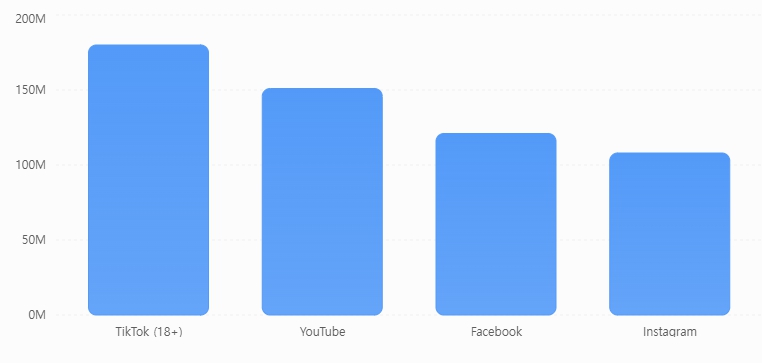
TikTok has an exceptionally large potential advertising audience, while YouTube and Instagram also offer substantial reach.
But reach is only one part of the story.
Google reported that more than 40 million logged-in Indonesian users actively searched for shopping-related content on YouTube, while shopping-related watch time increased by more than 400% over the previous year.
That makes YouTube particularly relevant for product research, demonstrations, and detailed reviews, even when purchases ultimately occur elsewhere.
Businesses should therefore distinguish between reaching an audience, influencing a purchasing decision, and completing a transaction.
3. Which Brands Are Winning Indonesian Consumers?
The 2026 YouGov Best Brand Rankings provide an important reality check for international companies.
Indonesia’s top brands — 2026
| Rank | Brand | Business | Index score |
| 1 | Shopee | E-commerce | 69.5 |
| 2 | Indomie | Food | 67.0 |
| 3 | Messaging | 64.3 | |
| 4 | Samsung | Electronics | 63.1 |
| 5 | YouTube | Video platform | 57.7 |
Source: YouGov Best Brand Rankings 2026. Index scores combine six brand-health measures, including quality, value, satisfaction and recommendation; they are not market shares.
Shopee leads the overall ranking, followed by Indonesia’s own Indomie. Samsung, a South Korean brand, ranks fourth.
The results show that Indonesian consumers are comfortable with international brands, but domestic brands can compete just as successfully when they offer strong value, familiarity, and accessibility.
Importantly, this is an overall brand ranking—not a separate ranking of the most preferred products in every industry.
4. Fashion, Beauty, Electronics, Food, and Furniture: Different Markets, Different Rules
Not every consumer category follows the same competitive pattern.
| Category | Brands worth examining | Market observation |
|---|---|---|
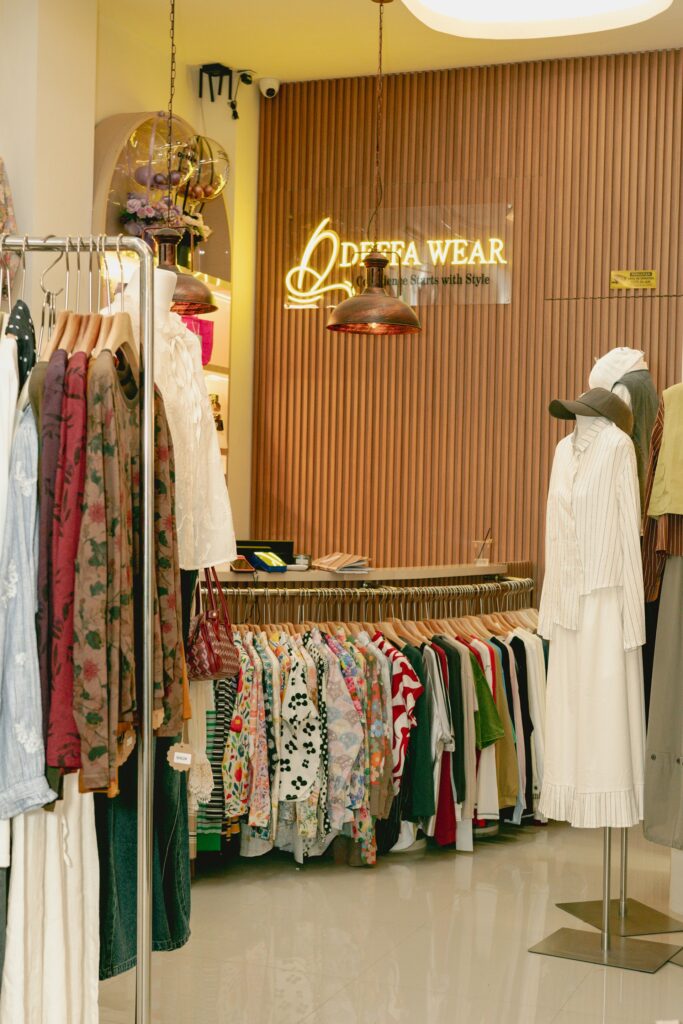
| Fashion | Uniqlo, H&M, Zara | International fashion retailers compete on style, positioning, and affordability |
| Beauty | Wardah, Make Over, L’Oréal | Local brands are important competitors; product suitability and trust matter |
| Food | Indomie, Oreo, KFC | Familiarity, pricing, and distribution are major competitive factors |
| Electronics | Samsung, Apple, Panasonic | Product performance, service, and brand reputation influence consideration |
| Furniture | IKEA, Informa | Store accessibility, delivery, and practical value shape the experience |
Illustrative competitive examples, not a verified category-by-category preference ranking. Brand prominence differs by category and research methodology.
One particularly interesting development comes from YouGov’s September 2026 brand-movement analysis.
Samsung and Panasonic appeared among the ten brands showing the broadest improvements across consumer perception metrics. In June, beauty brand Make Over led the monthly ranking, while Apple also appeared among the strongest movers.
These results measure improvements in brand perception, not absolute sales leadership.
The distinction matters: a brand can be growing in popularity without being the category’s largest seller.
5. What Does This Mean for Korean and Other Foreign Brands?
Indonesia is not a market where international reputation automatically guarantees success.
A Korean skincare brand may benefit from interest in K-beauty, but still needs appropriate pricing, product registration, distribution, and communication.
A fitness or wellness company may attract attention through international expertise, but customers will ultimately evaluate instructor quality, accessibility, service standards, and results.
For businesses considering expansion, three priorities stand out.
First, identify where consumers actually research the product. A beauty brand may benefit from short demonstrations, while expensive electronics may require detailed reviews.
Second, study local competitors before finalizing prices. Indonesian brands often have established distribution networks and deep familiarity with consumer expectations.
Third, test demand through local partnerships, creator collaborations, and limited product launches before making large financial commitments.
The Bigger Picture
Indonesia’s consumer market is not simply becoming more digital. It is becoming more competitive, more content-driven, and more demanding.
The opportunity for foreign brands is significant, but the companies most likely to succeed are those that understand the difference between attracting attention and earning repeat customers.
In Indonesia, a famous brand may win the first click. Real value wins the next purchase.