

Indonesia Delays Halal Certification Rules to 2028: What Does It Mean for Consumers?
Indonesia has extended the deadline for several halal certification requirements. But what exactly is halal, why is certification becoming mandatory, and what will change?
What Does the Halal Label on a Product Mean?
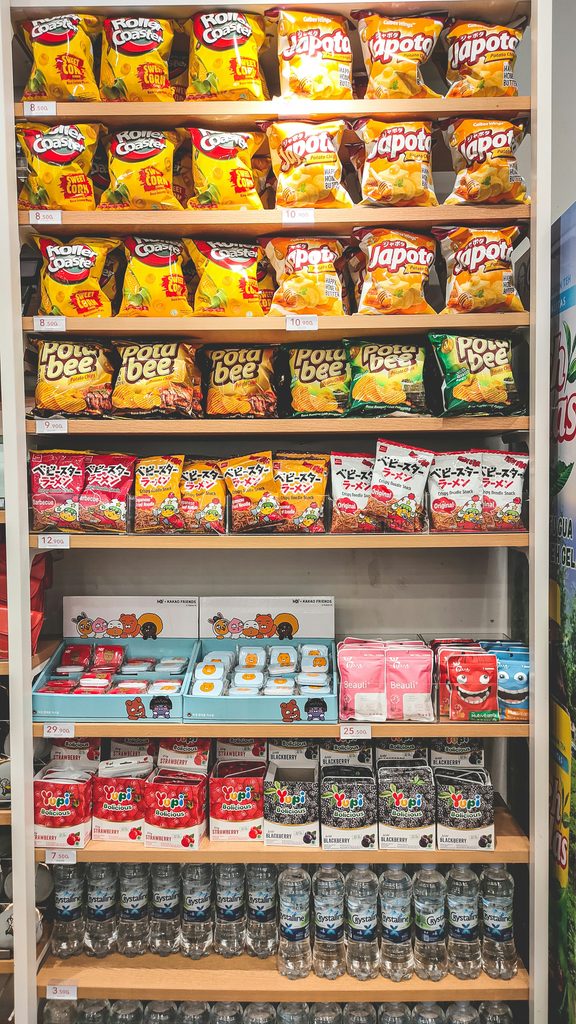
Walk into a supermarket in Jakarta, and you will notice a familiar symbol on many food packages: the Indonesian halal label.
You might see it on instant noodles, snacks, beverages, or packaged meat. It may also appear on cosmetics and other consumer products.
For Muslim consumers, the label provides important information about whether a product meets Islamic requirements.
But what exactly does halal mean?
The Arabic word halal means “permissible” under Islamic law. Its opposite, haram, refers to what is prohibited.
In food, halal requirements commonly involve ingredients such as pork and alcohol, as well as the way animals are slaughtered and food is prepared.
However, halal certification involves more than checking the ingredients listed on a package.
Production, processing, storage, and handling may also be examined to help ensure that a product meets the applicable requirements.
In Indonesia, the government agency responsible for the halal product assurance system is the Halal Product Assurance Agency (BPJPH).
An official halal certificate confirms that a product has passed the certification process under Indonesian regulations.
Why Is Indonesia Making Halal Certification Mandatory?
Indonesia is home to one of the world’s largest Muslim populations, making halal information an important part of everyday consumer choices.
For many years, halal certification was familiar to consumers, but the government has been developing a more comprehensive national system.
The legal foundation was established through Law No. 33 of 2014 on Halal Product Assurance, with implementation introduced in stages.
The government’s central objective is to provide clearer information and greater certainty about the halal status of products sold in Indonesia.
The system also aims to establish consistent standards for manufacturers, retailers, and imported goods.
For example, a consumer buying packaged food should be able to identify whether it has been officially certified rather than relying solely on a seller’s claim.
There is another important point: Indonesia has not banned all non-halal products.
Products containing non-halal ingredients can still be sold when they comply with the relevant regulations, including requirements to clearly identify their non-halal status.
The purpose is to help consumers make informed choices.
What Was Supposed to Happen in October 2026?
Indonesia has been introducing mandatory certification gradually rather than applying every requirement at once.
In October 2024, halal certification became mandatory for specified food, beverage, and slaughter-related products supplied by medium and large businesses.
The next major phase was scheduled for October 18, 2026.
It was expected to bring additional requirements for smaller businesses, imported products, cosmetics, health supplements, and certain other goods.
But implementing a nationwide certification system is complicated.
Millions of businesses may be affected. Manufacturers must review ingredients and production processes, while certification bodies need enough trained personnel and capacity to handle applications.
Imported products also require coordination between Indonesian authorities and recognized halal certification bodies abroad.
As the deadline approached, businesses and industry associations raised concerns about whether everyone could comply in time.
On October 16, just two days before the scheduled implementation date, the Indonesian government announced a major timetable adjustment.
What Has Changed? The New Halal Certification Deadlines
Indonesia’s Coordinating Ministry for Economic Affairs announced that several certification phases would be extended, following an assessment of industry readiness and feedback from businesses.
The key changes are:
| Product or business category | Announced timetable |
|---|---|
| Food, beverages, slaughter products and slaughter services from micro and small businesses | Transition extended through October 17, 2028 |
| Specified imported food, beverage and slaughter-related products and services | Mandatory implementation from October 18, 2028 |
| Certain food, beverage and slaughter-related services, excluding slaughter services | Mandatory implementation from October 18, 2028 |
| Cosmetics, health supplements, traditional medicines, certain chemical products and specified other goods | Transition extended through October 17, 2028 |
| Over-the-counter and restricted over-the-counter medicines | Existing October 17, 2029 deadline retained |
| Certain prescription medicines, excluding psychotropics | Existing October 17, 2034 deadline retained |
Source: Indonesia’s Coordinating Ministry for Economic Affairs, October 16, 2026. The timetable applies to specified categories, not every product without exception.
This is an important distinction.
The halal certification system has not been postponed in its entirety until 2028.
Requirements already in force remain relevant. The adjustment provides additional preparation time for specific product categories and businesses.
The government also announced plans to align the implementing regulations with the revised timetable.
For businesses, the exact requirements will depend on their products, size, and applicable rules.
What Does This Mean for Ordinary Consumers?
For shoppers, the immediate impact may be less dramatic than the headline suggests.
Halal-certified products will continue to be available, and existing certification requirements do not simply disappear.
The government still expects businesses to provide appropriate information about their products.
Consumers should also understand that a product without a halal logo is not automatically proven to contain prohibited ingredients.
It may not yet have completed the certification process, or it may belong to a category with a different timetable.
Equally, a seller’s claim that a product contains no pork does not, by itself, replace official halal certification.
For consumers who depend on halal certification, checking the official label and verified product information remains important.
Why Does the Delay Matter Beyond Indonesia?
The policy is also significant for foreign companies that sell products in Indonesia.
Food, cosmetics, supplements, and certain manufactured goods often pass through complex international supply chains.
A product made overseas may need to meet Indonesian halal rules even if it has already been certified elsewhere.
The government has been working on recognition arrangements with foreign certification bodies to make this process more practical.
The two-year extension gives affected businesses more time to prepare, but it does not remove the need to understand the rules.
It also reflects a familiar policy challenge: how can a government strengthen consumer protection without making compliance unnecessarily difficult for smaller businesses and international suppliers?
Indonesia’s answer, at least for now, is to introduce some requirements more gradually.
A Longer Deadline, but the Same Question
Indonesia’s halal certification policy is about more than a symbol printed on a package.
It concerns consumer confidence, religious requirements, product information, and the practical realities of a large and diverse marketplace.
The October 16 announcement gives certain businesses more time to prepare, while keeping the broader halal assurance framework in place.
The coming years will test whether regulators and businesses can use that time effectively.
The real measure of success will not simply be how many products carry a halal label, but whether consumers can trust the information behind it — and whether businesses can meet the standards fairly and clearly.