South Korea Since 1900 – From Empire and Colonization to a Modern Nation
At the beginning of the 20th century, Korea was still an independent kingdom that had recently declared itself the Korean Empire.
But its sovereignty was rapidly weakening as competition among regional powers intensified.
In 1910, Japan formally annexed Korea and assumed control over its government and administration. Japanese colonial rule would continue until the end of the Second World War in 1945.
The century that followed would include colonial rule, liberation, national division, war, authoritarian government, rapid industrialization, democratization and the rise of South Korea as a high-income economy.
Understanding those transitions helps explain much of modern South Korea.
1910–1945: Japanese Colonial Rule
Japan formally annexed Korea in August 1910.
Under colonial rule, Korea lost its sovereignty and was governed as part of the Japanese Empire. The colonial period transformed political institutions, land ownership, industry, education and social life, while Korean independence movements developed both inside and outside the peninsula.
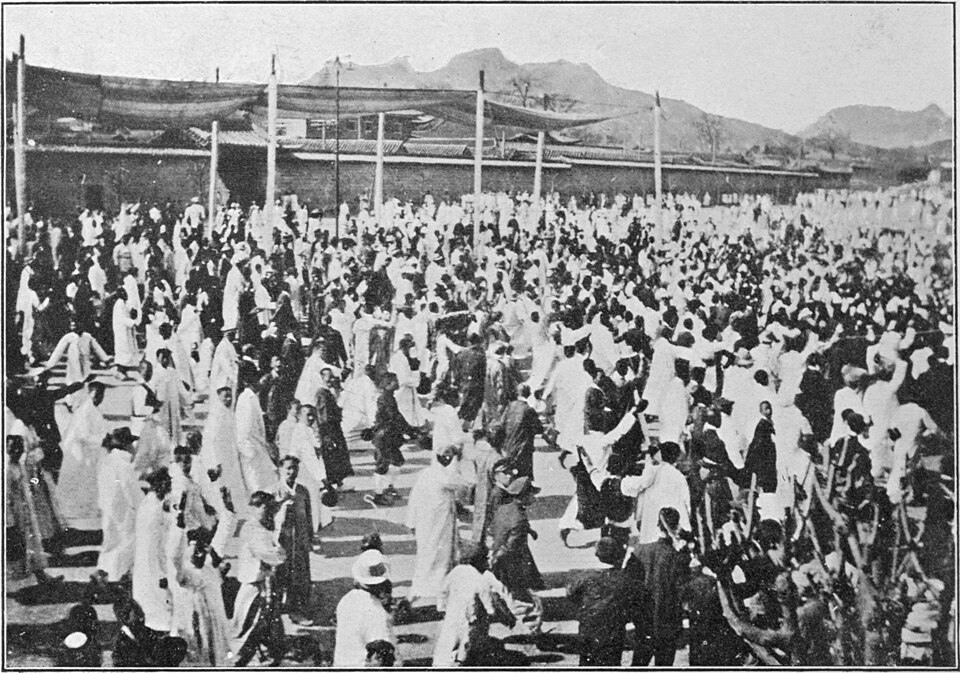
One of the best-known independence movements was the March First Movement of 1919, when mass demonstrations demanding Korean independence spread across the country.
The independence movement did not immediately end colonial rule, but it became an important symbol of Korean nationalism and resistance.
Korean activists also continued independence activities abroad, particularly in China, the United States and other parts of Asia. U.S. diplomatic records from the period note that Korean exile groups continued to pursue international recognition for Korean independence through the interwar years and during the Second World War.
1945: Liberation — and Division
Japan surrendered in August 1945, ending 35 years of colonial rule.
For Koreans, liberation brought enormous expectations of immediate independence.
But Korea was divided into two occupation zones for the purpose of accepting the Japanese surrender. Soviet forces entered the north, while U.S. forces occupied the south, with the dividing line set at the 38th parallel.
The line had originally been intended as a temporary military arrangement.
Instead, growing Cold War tensions between the Soviet Union and the United States made political unification increasingly difficult. Attempts to establish a single national government failed, and the occupation zones developed separate political systems.
In 1948, two separate governments emerged on the Korean Peninsula: the Republic of Korea in the south and the Democratic People’s Republic of Korea in the north.
Liberation had therefore ended colonial rule, but it had not produced a unified independent Korea.
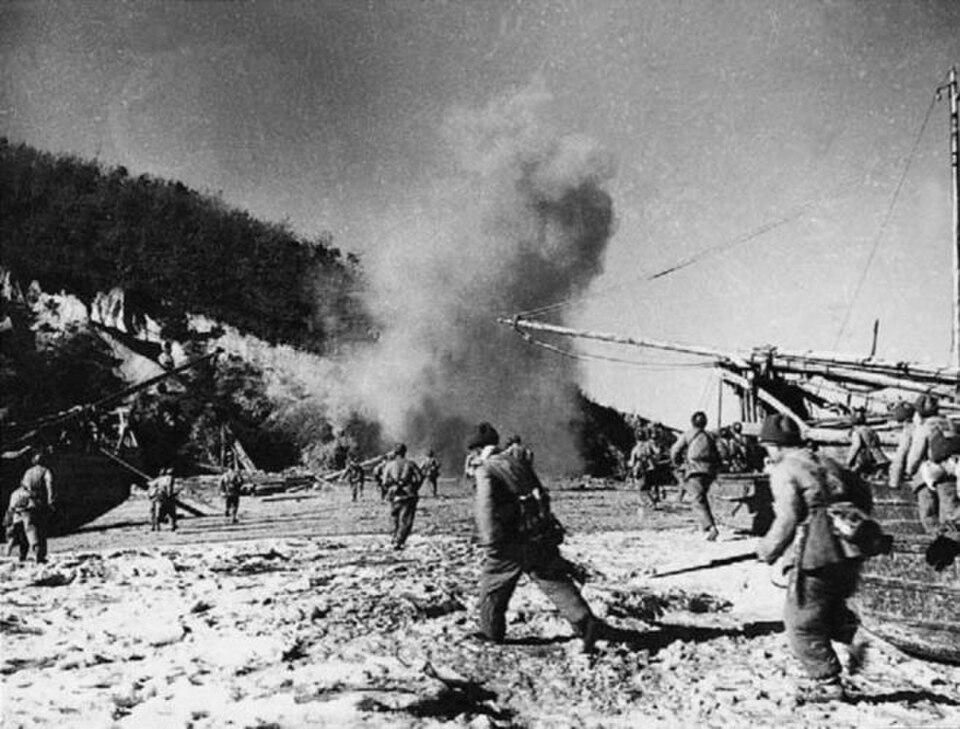
1950–1953: The Korean War
On 25 June 1950, North Korean forces crossed the 38th parallel and attacked South Korea.
The conflict rapidly became international. United Nations forces, led primarily by the United States, supported South Korea, while China entered the war on the North Korean side.
The war devastated the peninsula and caused enormous military and civilian losses.
After three years of fighting, the Korean Armistice Agreement was signed on 27 July 1953.
The agreement stopped open hostilities and created the Demilitarized Zone, or DMZ, but it was an armistice rather than a permanent peace treaty.
The Korean Peninsula remained divided.
For South Korea, the aftermath of the war meant rebuilding a country whose infrastructure and economy had been severely damaged.
The Early Republic and Political Instability
The Republic of Korea had been established in 1948 under President Syngman Rhee.
During the post-war years, South Korea remained economically poor and politically unstable.
Opposition to the Rhee government grew, particularly over authoritarian practices and election irregularities.
In 1960, nationwide protests known as the April 19 Revolution followed accusations of electoral fraud. The demonstrations ultimately led to Rhee’s resignation and the establishment of the Second Republic.
But that democratic period was short.
1961: Military Coup and the Park Chung Hee Era
On 16 May 1961, a military coup led by Park Chung Hee brought an end to the Second Republic.
Park initially ruled through a military government before becoming president under a civilian constitutional framework.
His rule would last until 1979 and would combine rapid economic development with increasingly authoritarian political control.
South Korea’s economic strategy changed dramatically during this period.
The government emphasized industrialization, exports, infrastructure, education and close coordination between state institutions and large private companies.
From the 1960s onward, the economy expanded at exceptionally high rates. World Bank data and historical assessments describe sustained rapid growth driven by export expansion, investment, industrialization and human-capital development.
The transformation later became widely known as the Miracle on the Han River.
Industrialization and the Rise of the Chaebol
South Korea initially concentrated on labor-intensive industries such as textiles and light manufacturing.
By the 1970s, policy shifted toward heavy and chemical industries, including steel, shipbuilding, machinery and petrochemicals.
Large corporate groups — later widely known as chaebol — became major participants in this industrial strategy.
Government-directed finance, export targets, infrastructure development and investments in education helped South Korean companies move into increasingly sophisticated industries.
Economic transformation was extraordinarily rapid.
But political liberalization did not proceed at the same speed.
1972–1979: The Yushin System
In 1972, Park Chung Hee introduced the Yushin Constitution.
The new constitutional framework further concentrated presidential power, removed limits on presidential re-election and established an indirect election system.
Opposition grew among students, religious groups, intellectuals, workers and opposition politicians.
Park was assassinated in 1979, ending his 18-year rule.
But South Korea did not immediately transition to full democracy.
1980: Gwangju and Continued Military Rule
After Park’s death, demands for political reform increased.
That opening was soon interrupted by the rise of General Chun Doo-hwan and another period of military-backed authoritarian rule.
In May 1980, citizens in Gwangju protested against military rule.
Security forces suppressed the uprising, and the event became one of the most important and painful episodes in South Korea’s democratization history.
During the 1980s, South Korea’s economy continued to expand while demands for political freedom intensified.
1987: The Democratic Turning Point
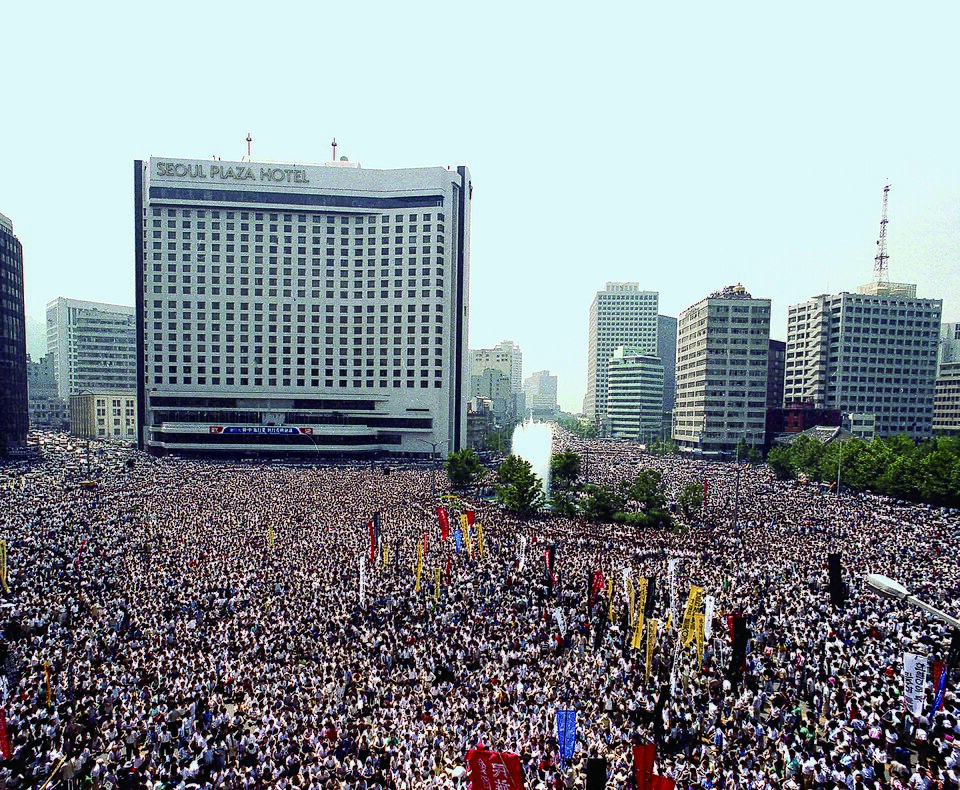
By 1987, nationwide protests against military rule had reached unprecedented scale.
The deaths of student activists Park Jong-chul and Lee Han-yeol became major catalysts for the June Democracy Movement.
Large demonstrations spread across the country, and the government eventually accepted constitutional reforms that restored direct presidential elections.
The December 1987 presidential election took place under the new constitutional system, marking the beginning of South Korea’s Sixth Republic.
This period is generally regarded as the decisive transition to South Korea’s current democratic system.
From Manufacturing Powerhouse to High-Income Economy
Political democratization coincided with another major transformation: South Korea was moving from an industrializing economy toward a technologically advanced one.
During the 1980s and 1990s, investment increasingly shifted toward higher education, research and development, electronics and advanced manufacturing.
South Korea became one of the relatively few economies to move from low-income status in the post-war period to high-income status within several decades.
The World Bank notes that Korea experienced 29 years of exceptionally rapid growth from 1962 to 1991 and crossed into high-income status around the mid-1990s.
1997: The Asian Financial Crisis
That growth story faced a major shock in 1997.
South Korea was hit by the Asian Financial Crisis, exposing weaknesses in financial regulation, corporate debt structures and relations between banks and large companies.
GDP contracted by about 5 percent in 1998, while unemployment rose sharply.
The crisis led to extensive financial, corporate, labor-market and public-sector reforms.
Recovery was rapid: World Bank data show strong growth returning in 1999.
The crisis became another major turning point in South Korea’s economic development.
A Different Country from the One That Entered the Century
South Korea entered the 20th century as part of a peninsula under growing foreign pressure.
It experienced annexation, colonial rule, liberation, division and a devastating war before beginning its transformation into a modern industrial state.
Its post-war development was also not a single uninterrupted success story.
Rapid economic growth occurred alongside long periods of authoritarian government, political confrontation and large democratization movements.
By the end of the 20th century, however, South Korea had become both a competitive democracy and an advanced industrial economy.
The transition can be summarized as:
Empire → Colonial Rule → Liberation → Division → War → Authoritarian Development → Democratization → High-Income Economy
Like Indonesia, modern South Korea was shaped by more than the moment of independence alone.
Its present institutions, economy and society reflect more than a century of conflict, reconstruction, political change and economic transformation.
Key Timeline
| Year | Event |
|---|---|
| 1910 | Japan formally annexes Korea |
| 1919 | March First independence movement |
| 1945 | Liberation from Japanese colonial rule; peninsula divided into Soviet and U.S. occupation zones |
| 1948 | Republic of Korea established in the south |
| 1950–1953 | Korean War |
| 1953 | Armistice signed; DMZ established |
| 1960 | April 19 Revolution; Syngman Rhee resigns |
| 1961 | Park Chung Hee-led military coup |
| 1960s–1970s | Export-led industrialization accelerates |
| 1972 | Yushin Constitution |
| 1979 | Park Chung Hee assassinated |
| 1980 | Gwangju Democratic Uprising |
| 1987 | June Democracy Movement and restoration of direct presidential elections |
| 1997–1998 | Asian Financial Crisis |
| 1990s onward | Transition toward a high-income, technology-driven economy |
Key Points
- Korea lost its sovereignty when Japan formally annexed the country in 1910, beginning 35 years of colonial rule.
- Liberation in 1945 was immediately followed by division into Soviet and U.S. occupation zones around the 38th parallel.
- The Korean War began in 1950 and ended in a 1953 armistice, not a permanent peace treaty.
- South Korea experienced prolonged authoritarian rule while undergoing exceptionally rapid industrialization from the 1960s onward.
- The democratization movements of the 1960s–1980s culminated in constitutional reform and direct presidential elections in 1987.
- By the mid-1990s, South Korea had moved into the ranks of high-income economies, although the 1997 Asian Financial Crisis triggered another major restructuring.