
South Korea to Indonesia Visa Guide — VOA, e-VOA, Business Visits & Short Stays
For South Koreans traveling to Indonesia, the visa process is relatively simple for short visits.
But the important question is not only:
“Can I enter Indonesia?”
It is also:
“What am I allowed to do once I arrive?”
Tourism, business meetings, exhibitions, training, market research, and paid work can fall under very different immigration rules.
For anyone traveling between Korea and Indonesia for business, fitness, wellness, events, or creator-related projects, understanding that difference is essential.
Can South Koreans Use Visa on Arrival in Indonesia?
Yes.
South Korean passport holders are eligible for Indonesia’s Visa on Arrival (VoA) and electronic Visa on Arrival (e-VoA) system.
The standard B1 Visa on Arrival allows a stay of up to 30 days from the date of arrival. It can generally be extended once for another 30 days, for a maximum stay of 60 days. 자카르타 이민청
For most short visits, this is the simplest option.
VOA or e-VOA — What Is the Difference?
Both serve a similar purpose, but the process is different.
Visa on Arrival
A normal Visa on Arrival can be obtained after arriving at an eligible Indonesian airport or immigration checkpoint.
You pay the visa fee at the airport and then proceed through immigration.
e-VOA
The e-VOA can be applied for online before departure.
This is usually more convenient because the visa is already issued before arrival, and the traveler can proceed directly to immigration without queuing at the VOA payment counter. 이비자 시스템
For frequent travelers, business visitors, and anyone who wants to reduce airport procedures, the e-VOA is generally the more practical option.
How Long Can You Stay?
The B1 Visa on Arrival allows:
- Initial stay: up to 30 days
- Extension: one additional 30-day period
- Maximum total stay: 60 days
For e-VOA holders, the extension can be processed online through the official eVisa system. For a non-electronic VOA, the extension is generally handled through the relevant immigration office. 자카르타 이민청
If you know in advance that your stay will exceed 30 days, it is better to plan the extension early rather than wait until the last few days.
How Much Does It Cost?
The official fee for the B1 Visa on Arrival is currently:
IDR 500,000
This applies to the standard 30-day stay. Official Indonesian immigration sources also list the extension fee for the additional 30-day period as IDR 500,000. Bontang Imigrasi
The fee can be paid digitally for e-VOA applications, while normal VOA payment is handled at the designated payment counter at the airport. 자카르타 이민청
What Documents Do You Need?
For a standard VOA or e-VOA application, travelers should generally prepare:
- A passport valid for at least 6 months
- A return ticket or onward ticket
- A recent photo for e-VOA application
- Accommodation information
- Basic travel details
Official Indonesian immigration guidance specifically requires a passport with at least six months of remaining validity and proof of onward or return travel. 이비자 시스템
What Can You Do With a B1 Visa?
The B1 Visa on Arrival can be used for activities such as:
- Tourism
- Visiting family
- Attending meetings
- Attending conventions
- Attending exhibitions
- Transit
Official Indonesian immigration guidance also includes meetings, incentive activities, conventions, and exhibitions among permitted B1 activities. 자카르타 이민청
This makes the B1 visa useful for many short business visits.
For example, a Korean professional visiting Jakarta to:
- Meet a local partner
- Visit a fitness studio
- Attend an exhibition
- Explore the market
- Hold preliminary business discussions
may be able to use a B1 visa, provided the activities do not become employment or paid work in Indonesia.
Business Meetings Are Not the Same as Working
This distinction is very important.
A short business meeting, market visit, conference, or exhibition is not the same as performing paid work.
For example:
Scenario A
A Korean fitness professional visits Jakarta to meet potential partners and tour several studios.
This may fit within a short business visit.
Scenario B
The same person begins teaching classes, providing paid consulting, or working regularly for an Indonesian company.
That may require a different visa or stay permit.
Indonesia’s e-VOA guidance specifically states that it is not valid for purposes such as work or study. 이비자 시스템
So the key rule is simple:
Choose the visa based on what you will actually do in Indonesia.
What About Workshops, Training and Events?
This area needs more attention because the correct visa can depend on whether someone is:
- Attending a workshop
- Participating in training
- Speaking at an event
- Teaching
- Performing professional services
- Receiving payment
For example, a Korean instructor attending a fitness exhibition as a visitor is different from the same person teaching a paid workshop in Jakarta.
The first may fit within a short visit.
The second may require a different visa structure.
For STM, TCI, IDEA Asia, and other projects involving instructors, creators, educators, and presenters, this distinction will become increasingly important.
The New “All Indonesia” Arrival Declaration
Travelers should also be aware of All Indonesia, Indonesia’s integrated arrival declaration system.
It combines several arrival procedures into one digital platform, including:
- Immigration
- Customs
- Health
- Quarantine declarations
The system became mandatory for international arrivals at major entry points and has since been expanded more broadly. Indonesian immigration states that the declaration can be completed up to three days before arrival and is free of charge. Batam Imigrasi
For travelers entering through Jakarta, Bali, Surabaya, or other international gateways, this should now be part of the pre-departure checklist.
Entering Through Jakarta or Bali
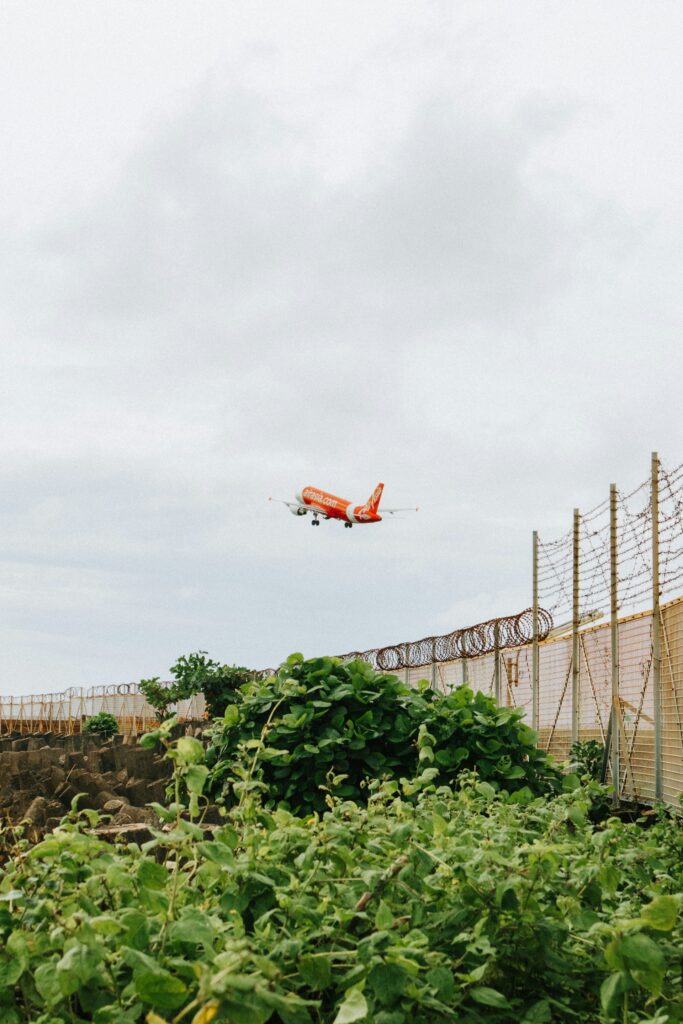
For most Korean travelers, the main entry points are:
Soekarno-Hatta International Airport — Jakarta
or
I Gusti Ngurah Rai International Airport — Bali
Both airports handle large numbers of international visitors and are familiar with VOA and e-VOA procedures.
For short business trips, Jakarta is usually the main entry point.
For tourism, wellness, retreats, or leisure travel, Bali is often the more common destination.
A Practical Example: Korean Fitness Professional Visiting Jakarta
Imagine a Korean trainer visiting Jakarta for one week.
The schedule includes:
- Meeting a local partner
- Visiting several fitness studios
- Attending an exhibition
- Discussing a future workshop
- Exploring potential business opportunities
A B1 VOA or e-VOA may be appropriate for this kind of short visit.
But if that same trainer later returns to Indonesia to teach paid workshops, provide professional services, or work on an ongoing project, a different visa may be needed.
This is why the visa should always match the actual activity.
A Practical Checklist Before Departure
Before flying from Korea to Indonesia, check:
- Passport validity of at least 6 months
- Return or onward ticket
- e-VOA approval, if applying in advance
- Hotel or accommodation details
- All Indonesia arrival declaration
- Purpose of visit
- Whether any planned activity could be considered work
For a simple holiday, the process is straightforward.
For business, training, workshops, or professional activities, it is worth checking the exact visa requirements before departure.
Final Thoughts
Travel between Korea and Indonesia is becoming easier.
But as business, education, fitness, wellness, and creator projects grow between the two countries, understanding immigration rules becomes more important.
A short visit may be simple.
A professional activity may not be.
For anyone building projects between Korea and Indonesia, visa planning is not just an administrative detail.
It is part of making cross-border collaboration work properly.
Korea → Indonesia may begin with a flight.
But the right visa determines what you can actually do after you land.