Ramyeon vs Mi Goreng: Why Do Korea and Indonesia Love Instant Noodles So Much?
From Indonesia’s beloved dry noodles to Korea’s spicy ramyeon, discover how two countries have made instant noodles part of everyday life.
Instant noodles are more than just a quick meal. They are comfort food, a late-night snack, a student budget saver, and sometimes even a source of national pride.
In Indonesia, a plate of sweet, savory, and spicy mi goreng is a familiar favorite. In South Korea, a steaming bowl of spicy ramyeon offers a completely different experience.
But how popular are instant noodles around the world?
According to the World Instant Noodles Association (WINA), global demand reached approximately 123.4 billion servings in 2025, based on its latest revised figures.
And the country at the top might surprise you.
The World’s Top 10 Instant Noodle Markets
China and Hong Kong together ranked first, with approximately 43.27 billion servings in 2025.
Indonesia came second with 14.54 billion servings, while South Korea ranked ninth with 4.06 billion.
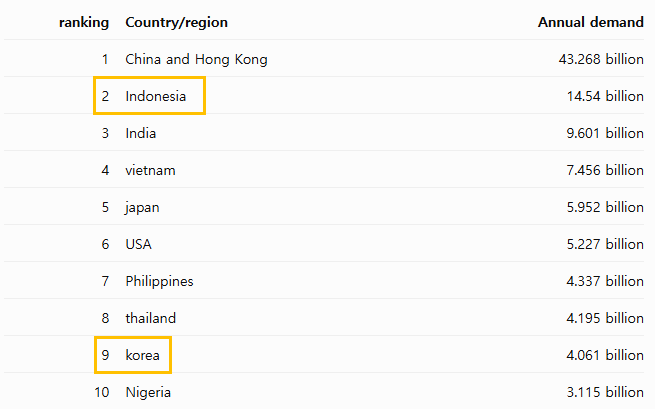
Source: WINA Global Demand Rankings. Figures are national or regional demand estimates, not per-person consumption.
#2 · INDONESIA
14.54B
Servings in 2025
#9 · SOUTH KOREA
4.06B
Servings in 2025
These rankings reveal the enormous scale of Asia’s instant noodle culture. However, total demand does not tell us how many servings the average person eats. Population size makes a significant difference.

Indonesia: The Irresistible Taste of Mi Goreng
Indonesia’s instant noodle culture is closely associated with mi goreng, a dry noodle dish known for its combination of sweet soy sauce, savory seasoning, chili, and aromatic oil.
Unlike traditional soup noodles, instant mi goreng is usually cooked, drained, and mixed with seasonings.
Many Indonesians make it their own by adding a fried egg, vegetables, sliced chilies, or even rice.
Its appeal goes beyond flavor. Instant noodles are affordable, convenient, and widely available at supermarkets, neighborhood shops, and small food stalls.
For students, workers, and families, they can be a practical meal or a comforting snack.
South Korea: A Bowl of Spicy Comfort
South Korean ramyeon has a different identity.
Although dry and stir-fried varieties are also popular, spicy soup-based ramyeon remains an iconic part of Korean food culture.
Its springy noodles, rich broth, and distinctive chili flavor create a satisfying meal, especially during cold weather or late at night.
Common additions include eggs, green onions, cheese, and rice cakes.
Ramyeon also appears frequently in Korean dramas and entertainment, helping introduce the dish to international audiences.

Two Countries, Two Ways to Enjoy Noodles
Despite their differences, mi goreng and ramyeon share something important.
Both are inexpensive, convenient foods that people can personalize according to their tastes.
One might be enjoyed with a fried egg and sweet soy sauce, while the other is served in a steaming spicy broth.
Neither style is better. They simply reflect different food traditions and everyday preferences.
And while Indonesia ranks much higher in total demand, South Korea’s smaller population means the rankings alone cannot determine which country’s residents eat more instant noodles per person.
What’s Your Favorite Bowl?
From China and Indonesia to Korea and Nigeria, instant noodles have become a truly global food.
Yet every country has developed its own flavors, cooking habits, and favorite combinations.
So here’s a question worth sharing:
Do you prefer Indonesia’s sweet and savory mi goreng, Korea’s spicy soup ramyeon, or another country’s instant noodles?
Sometimes, the simplest foods tell the most interesting stories about how people live.